
How Much Does It Cost to Get Married? Your Budget Guide
When planning your wedding, understanding the costs involved is essential. The average expense in the U.S. hovers around $30,000, but that number can vary widely based on location and preferences. Major expenses like the venue, catering, and attire can quickly add up. Knowing where to focus your budget can make a significant difference. So, how do you break down these costs effectively and find ways to save? Let’s explore.
The Essentials
- The average wedding cost in the U.S. is around $30,000, influenced by location and guest count.
- Major expenses typically include the venue, catering, attire, and photography, which should be budgeted accordingly.
- Venue selection affects costs significantly; consider guest list size, style, and rental fees.
- Catering can consume 20% to 50% of the budget; explore buffet options and limit alcohol choices to save money.
- To reduce costs, prioritize essentials, consider off-season dates, and limit the guest list.
Understanding the Average Wedding Costs
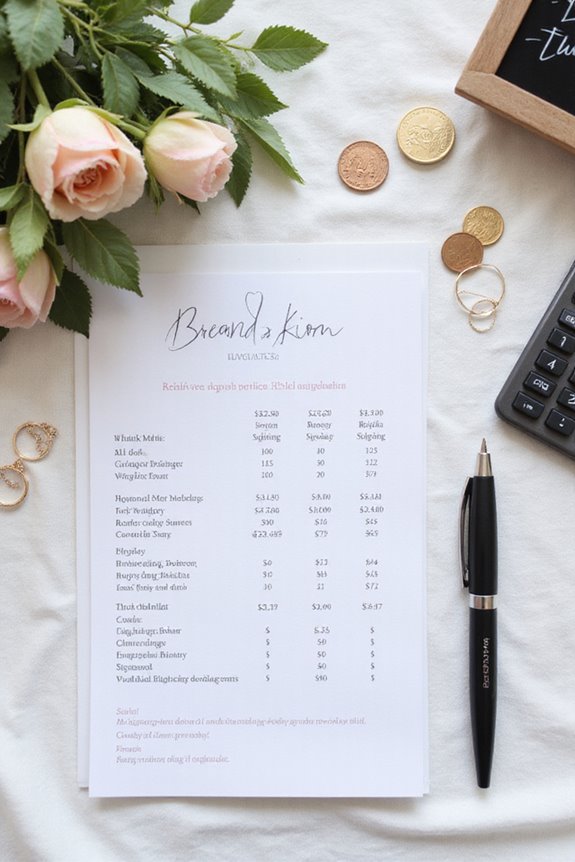
When planning your big day, understanding average wedding costs is essential. Knowing what’s typical can help you avoid overspending and keep your budget in check. On average, couples in the U.S. spend around $30,000 for their wedding, but this figure can vary greatly based on location, guest count, and personal preferences. For instance, urban areas often have higher costs than rural ones. It’s important to take into account all aspects, from venue fees to catering services, as they can quickly add up. You might also want to look into seasonal trends, as some months are more expensive than others. By grasping these averages, you’ll be better equipped to make informed decisions and allocate your budget effectively.
Breaking Down the Major Expenses
As you plunge into wedding planning, breaking down the major expenses will help you navigate the financial landscape more easily. Start by considering the venue, which often takes up a significant portion of your budget. Next, think about catering; food and drinks can add up quickly, so explore options that fit your style and budget. Don’t forget about attire—wedding dresses, suits, and accessories can vary widely in price. Photography and videography are essential for capturing those special moments, so allocate funds for these services. Additionally, factor in flowers, decorations, and entertainment, as they’ll enhance your celebration. Finally, set aside a contingency fund for unexpected costs. With this breakdown, you’ll feel more prepared to tackle wedding expenses.
Venue Selection: What to Expect
Selecting the right venue is one of the most essential decisions in your wedding planning journey. You’ll want to take into account your guest list, style, and budget when exploring options. Start by deciding on the type of venue that fits your vision—think about outdoor spaces, historic buildings, or modern ballrooms.
Once you have a shortlist, visit each venue to get a feel for the atmosphere and available amenities. Ask about capacity limits, rental fees, and any hidden costs. Don’t forget to check for restrictions on decor or timing.
Ultimately, the venue sets the tone for your wedding, so take your time to verify it aligns with your dream day while keeping your budget in mind.
Catering and Beverage Costs

Catering and beverage costs can take up a significant portion of your wedding budget, often ranging from 20% to 50%. When planning, consider the type of meal you want to serve. A buffet might be more cost-effective than a plated dinner, but it can depend on your guest count and menu selection. Don’t forget to factor in the cost of beverages, including alcohol, which can add up quickly. You can opt for a cash bar, a limited open bar, or even signature cocktails to save money. Additionally, always ask about hidden fees, such as service charges and gratuity. By being strategic with your catering choices, you can guarantee your food and drink align with your budget while still delighting your guests.
Attire and Accessories: Wedding Dress and Suits
When it comes to attire and accessories for your wedding, the wedding dress and suits are often among the most significant expenses. Depending on your style, a wedding dress can range from a few hundred to several thousand dollars. If you’re on a budget, consider renting or buying pre-owned dresses to save money. For grooms, suits can also vary widely in price, with options available for purchase, rental, or even borrowing. Don’t forget about alterations, which can add to the cost. Accessories like shoes, jewelry, and veils can further impact your budget. Planning ahead and setting a realistic budget for attire will help guarantee you look your best without breaking the bank.
Photography and Videography: Capturing the Day
Capturing the memories of your special day is crucial, and investing in quality photography and videography can make all the difference. You’ll want to find professionals who understand your vision and can tell your unique story through their lens. Prices can vary considerably based on experience, location, and the package you choose. On average, you might spend anywhere from $1,000 to $3,000 for photography and another $1,000 to $2,500 for videography. Don’t forget to take into account additional costs, like travel fees or extra hours of coverage. It’s wise to meet with potential photographers and videographers, view their portfolios, and discuss your expectations. This way, you’ll guarantee you get the beautiful memories you’ll cherish for years to come.
Floral Arrangements and Decorations
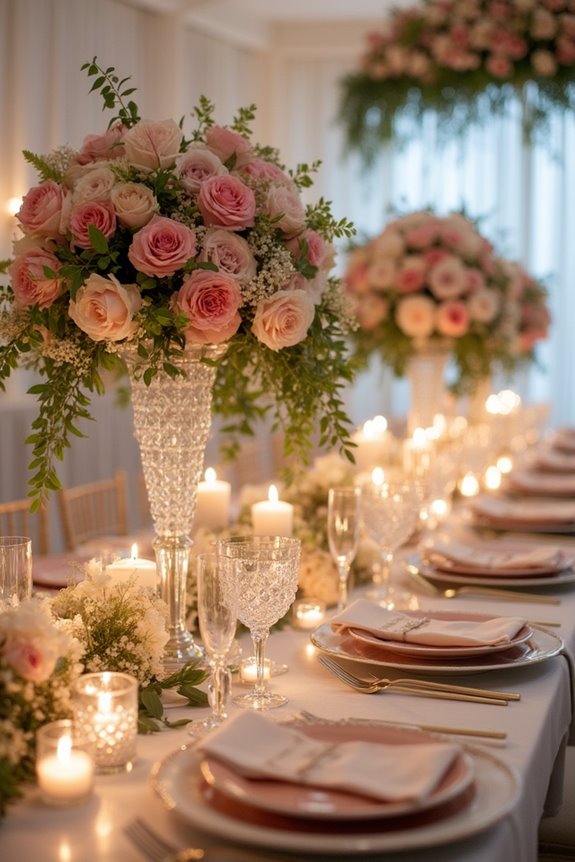
After you’ve secured stunning photography and videography to document your day, it’s time to think about the floral arrangements and decorations that will enhance your wedding’s ambiance. Flowers can set the mood, whether you prefer romantic roses or vibrant wildflowers. Budgeting for floral arrangements typically ranges from 10% to 15% of your total wedding budget, depending on your preferences. Consider bouquets, centerpieces, and ceremony decorations. Don’t forget about the little touches, like floral arches or petals for the aisle. To save costs, you might opt for in-season blooms or DIY some elements. Remember, it’s vital to communicate your vision to your florist to guarantee your floral arrangements reflect your style and complement your overall theme.
Entertainment Options for Your Celebration
While planning your wedding, you can’t overlook the importance of entertainment options that will keep your guests engaged and create lasting memories. Consider hiring a live band or a DJ to get everyone on the dance floor. If you’re looking for something unique, a photo booth with props can add a fun element while capturing moments. For a more interactive experience, you might think about hiring a magician or a caricature artist to entertain during the cocktail hour. Additionally, incorporating games or activities can break the ice and encourage mingling among guests. Whatever you choose, make sure it aligns with your wedding theme and reflects your personality as a couple, ensuring everyone has a blast at your celebration!
Tips for Saving on Your Wedding Budget
When you’re planning your wedding, it’s essential to keep your budget in check, so you can enjoy your big day without financial stress. Start by prioritizing your must-haves and cutting back on non-essentials. Consider a weekday or off-season wedding; venues are often more affordable then. DIY projects can save money, so don’t hesitate to get creative with decor or favors. Limit your guest list; fewer attendees mean lower costs for food and drinks. Shop around for vendors, and don’t be afraid to negotiate prices. Use digital invitations to save on printing and postage. Finally, keep an eye out for discounts or package deals, which can make a significant difference in your overall expenses.
Frequently Asked Questions
What Are the Hidden Costs of a Wedding I Should Consider?
You should consider costs like gratuities for vendors, alterations for attire, unexpected fees for venues, wedding insurance, and potential overtime charges. Don’t forget about rehearsal dinners, transportation, and those little extras that can add up.
How Can I Prioritize My Wedding Expenses Effectively?
To prioritize your wedding expenses effectively, list must-haves versus nice-to-haves. Focus on what truly matters to you both, allocate budget accordingly, and be flexible. Remember, it’s about celebrating your love, not just spending money.
Are There Any Financial Assistance Options for Weddings?
Yes, there are financial assistance options for weddings. You can explore crowdfunding, personal loans, or even family contributions. Some couples also consider grants or sponsorships from vendors, so don’t hesitate to ask around for support.
What Are Common Mistakes Couples Make With Their Wedding Budget?
You might underestimate costs, overlook hidden expenses, or prioritize the wrong elements. It’s easy to get swept up in trends, leading to overspending. Always stick to your budget and communicate openly with your partner about finances.
How Does the Season Affect Wedding Costs?
The season can greatly affect wedding costs. Summer and fall typically see higher prices due to demand, while winter and early spring might offer discounts. Planning around these trends can help you save money.