
How Long Is a Wedding Reception Usually?
When planning your wedding, you might wonder how long your reception should last. Typically, it ranges from four to six hours, allowing guests to enjoy the festivities without feeling rushed. However, several factors can influence this duration. Understanding these elements can help you create a memorable experience for everyone involved. So, what should you consider to strike the right balance for your special day?
The Essentials
- Most wedding receptions typically last about four to five hours, allowing guests to enjoy the festivities comfortably.
- Cocktail hours usually last around one hour for mingling before dinner is served.
- Dinner, including speeches, generally takes one to two hours of the reception timeline.
- Dancing often occupies the final two to three hours, creating a lively atmosphere for guests.
- Venue restrictions, guest numbers, and entertainment types can influence the overall length of the reception.
Understanding the Typical Duration of Wedding Receptions

When planning your wedding, it’s important to know that most receptions typically last about four to five hours. This timeframe allows you and your guests to enjoy the festivities without feeling rushed. During this period, you’ll want to include essential elements like dinner, speeches, and dancing.
A well-structured schedule can help maximize the enjoyment of your reception, ensuring everyone has a chance to mingle and celebrate. While four to five hours is standard, keep in mind that your personal preferences, venue constraints, and guest needs can influence this duration.
Ultimately, choosing the right length for your reception can enhance the overall experience, so consider what feels best for you and your loved ones as you plan.
Factors That Influence Reception Length
Several factors can influence the length of your wedding reception, so it’s important to take them into account during your planning process. First, consider your venue’s restrictions; some places have time limits that could shorten your celebration. Next, think about the number of guests you’re inviting; larger groups often lead to longer receptions due to more interactions and activities. Your chosen entertainment, like a live band or DJ, can also impact how long the party lasts. Additionally, cultural or religious traditions might dictate specific timelines for events like speeches and dances. Finally, your budget can play a role, as longer receptions may incur extra costs for food and drinks. Balancing these factors will help you create the perfect reception timeline.
Standard Reception Timelines
Most wedding receptions typically last between four to six hours, providing ample time for guests to enjoy food, drinks, and dancing. A standard timeline often begins with cocktail hour, lasting about one hour, where guests mingle before the newlyweds make their grand entrance. Following that, you’ll usually have dinner, which can take about one to two hours, allowing for speeches and toasts.
After dinner, it’s common to have a cake cutting ceremony, which sets the stage for the dancing portion of the evening. This part usually takes up the final two to three hours. By planning your reception around this standard timeline, you can guarantee a smooth flow of events while keeping the energy high and your guests engaged.
The Importance of Guest Experience
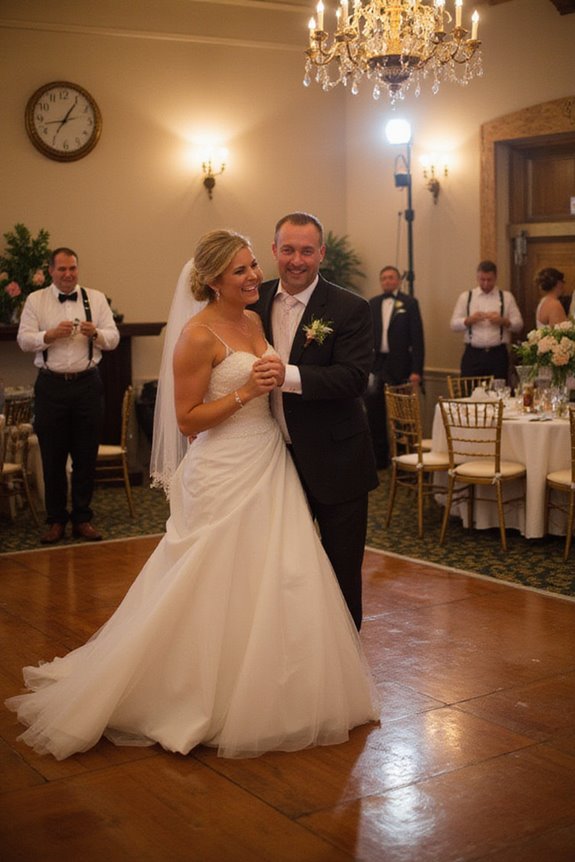
While you’re focused on the details of your wedding reception, remember that the guest experience plays an essential role in making the day memorable. Your guests are there to celebrate with you, so ensuring they feel welcomed and entertained is vital. Think about the flow of the event—guests shouldn’t feel rushed or bored. Consider providing comfortable seating and engaging activities that keep everyone involved. A well-timed meal and enjoyable music will keep spirits high and conversations flowing. Also, don’t underestimate the power of personal touches, like thank-you notes or small favors. When guests have a positive experience, they’ll leave with fond memories and stories to share, making your special day even more unforgettable.
Creating a Flexible Reception Schedule
Planning a memorable reception goes hand in hand with creating a flexible schedule that accommodates both your vision and your guests’ enjoyment. Start by outlining key moments like the first dance, speeches, and cake cutting, but be open to adjusting these times as needed. Consider allowing extra time between events, giving your guests a chance to mingle and enjoy the atmosphere. Remember, not everything will go exactly as planned, so build in buffer periods to avoid feeling rushed. You might even want to have a designated point person to handle any last-minute changes, allowing you to focus on having a great time. Flexibility in your schedule guarantees everyone can relax and truly celebrate your special day.
Tips for Keeping Guests Engaged
To guarantee your guests stay engaged throughout the reception, consider incorporating a variety of interactive activities. Think about setting up a photo booth with fun props, allowing everyone to capture memorable moments. You might also want to introduce games like a trivia quiz about the couple or a dance-off competition to get everyone moving.
Another great idea is to have a designated area for guests to leave messages or advice for the newlyweds, fostering connection and participation. You could even include a live band or DJ that takes requests, keeping the energy lively. Remember, the more engaged your guests feel, the more enjoyable the reception will be for everyone involved.
Personalizing Your Reception Duration

Personalizing your reception duration can make all the difference in creating a memorable experience for you and your guests. Think about your unique style and preferences; do you envision a lively celebration that lasts late into the night, or a more intimate affair that wraps up earlier? Consider your guests’ comfort too—longer receptions can lead to fatigue, while shorter ones might leave everyone wanting more.
You can also incorporate activities like speeches, dances, or games to help gauge how long to keep the party going. Ultimately, trust your instincts and communicate with your planner to design a timeline that reflects your vision and allows everyone to enjoy the moment. Remember, it’s your day, so make it yours!
Frequently Asked Questions
What Time Should the Ceremony Start for a Timely Reception?
You should aim to start the ceremony around 3 or 4 PM if you want a timely reception. This timing allows for photographs and shifts, ensuring everyone enjoys the celebration without feeling rushed.
How Can I Extend My Reception if Needed?
You can extend your reception by negotiating with your venue for extra hours, adding more entertainment options, or even hosting an after-party. Just make certain your guests are on board and the budget allows for it!
Are There Cultural Differences in Reception Lengths?
Yes, there’re definitely cultural differences in reception lengths. Some cultures celebrate for several hours or even days, while others may prefer shorter gatherings. It’s important to take into account your guests’ backgrounds and traditions when planning.
What Are Common Activities During a Wedding Reception?
During a wedding reception, you’ll typically enjoy dancing, toasts, cake cutting, and mingling with guests. There might be games or photo booths, too, creating fun memories while celebrating the couple’s special day together.
How Do Weather Conditions Affect Indoor/Outdoor Receptions?
Weather conditions can drastically impact your reception. Rain might force you indoors, while heat can make outdoor gatherings uncomfortable. Planning for contingencies helps guarantee your celebration runs smoothly, regardless of Mother Nature’s mood.