How Much Do Wedding Flowers Cost? A Detailed Breakdown
When planning your wedding, one of the key considerations is the cost of flowers. You might be surprised by how much they can vary based on factors like the type of blooms you choose and the complexity of the arrangements. Understanding these elements can help you manage your budget effectively. So, what should you expect when it comes to pricing, and how can you make the most of your floral budget?
The Essentials
- Wedding flower costs vary widely, typically ranging from $1 for budget blooms to $30 for exotic varieties like orchids.
- Seasonal flowers are more affordable; in-season blooms cost less due to freshness and reduced transportation fees.
- Average prices include $2-$10 for roses, $5-$15 for peonies, and $1-$3 for daisies and carnations.
- Larger or intricate arrangements increase costs; simpler designs and repurposing flowers can help budget.
- Budgeting and using DIY approaches can significantly reduce overall floral expenses while maintaining aesthetics.
Understanding the Factors That Influence Flower Costs
When planning your wedding, understanding the factors that influence flower costs can help you budget effectively. Several elements play a role in determining prices. First, the seasonality of flowers matters—some blooms are more expensive out of season. Second, the type of flowers you choose can greatly impact costs; exotic varieties typically carry a higher price tag. Third, the size and complexity of your arrangements will influence the total. Larger or more intricate designs require more materials and labor. Additionally, sourcing flowers locally may reduce costs compared to imported blooms. Finally, your florist’s experience and reputation can also affect pricing. By considering these factors, you can make informed decisions that align with your budget.
Types of Wedding Flowers and Their Price Ranges
With a better grasp on the factors influencing flower costs, it’s important to explore the various types of wedding flowers and their price ranges.
Roses typically range from $2 to $10 each, depending on the variety and quality. Peonies, often favored for their lush appearance, can be pricier, usually between $5 and $15 each. On the more budget-friendly side, daisies or carnations usually cost around $1 to $3 each.
If you’re looking for statement pieces, orchids can set you back $15 to $30 each. Additionally, seasonal blooms like sunflowers or zinnias may cost $1 to $5 each, making them a cost-effective choice. Understanding these ranges can help you budget effectively for your floral arrangements.
Seasonal Variations in Flower Availability and Pricing
Although flower availability can vary throughout the year, understanding seasonal trends can greatly influence your wedding budget. Choosing flowers in season not only guarantees freshness but often reduces costs. For instance, spring brings vibrant tulips and peonies, while summer showcases lush sunflowers and daisies. If you’re planning a fall wedding, consider rich-hued dahlias and chrysanthemums, and in winter, elegant roses and evergreens can set a beautiful tone. Off-season flowers can be considerably pricier due to transportation and import costs. By aligning your floral choices with the season, you can maximize your budget and create stunning arrangements that reflect the natural beauty of your wedding date. Keep these factors in mind when planning your floral decor.
Budgeting for Different Floral Arrangements
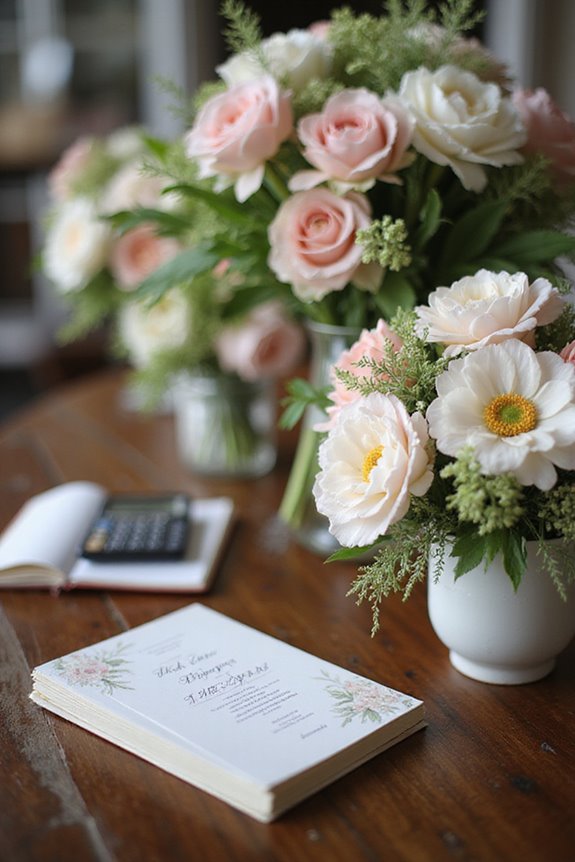
Choosing seasonal flowers not only helps your budget but also sets a foundation for planning various floral arrangements. Start by determining which arrangements you’ll need, such as bouquets, centerpieces, and ceremony decorations. Each type can vary greatly in cost, so prioritize your needs. For example, bridal bouquets tend to be more expensive due to their intricate designs, while simple table arrangements may be more budget-friendly.
Consider how many arrangements you’ll need and whether you can repurpose flowers throughout the day. For instance, using ceremony flowers as reception centerpieces can save money. Don’t forget to factor in vase rentals and additional greenery, as these can enhance your arrangements without breaking the bank. Ultimately, keep your vision aligned with your budget for a beautiful wedding day.
The Role of Floral Designers and Their Fees
When planning your wedding flowers, understanding the role of floral designers and their associated fees is essential. Floral designers bring your vision to life, crafting arrangements that match your theme and color palette. They’ll guide you through flower selection, ensuring quality and seasonal availability. Their expertise not only includes design but also logistics, like delivery and setup on your big day.
Fees for floral designers can vary widely based on experience, location, and the complexity of your arrangements. Some charge a flat rate, while others may offer packages based on the number of arrangements needed. Remember, this investment is vital for creating the atmosphere you desire, so be sure to communicate your budget and preferences clearly to find the right fit.
Tips for Saving on Wedding Flowers
Finding ways to save on wedding flowers can make a significant difference in your overall budget. Start by setting a clear budget for flowers before you meet with a florist. Consider using seasonal blooms, as they’re often more affordable and fresh. Simplifying your arrangements can also cut costs—think about using fewer flowers or opting for greenery. If you’re working with a florist, don’t hesitate to ask for their suggestions on cost-effective options. Another tip is to limit your floral décor to key areas, like the ceremony and reception tables, instead of everywhere. Finally, DIY some elements or enlist friends to help, making your flowers personal and saving you money.
Creative Alternatives to Traditional Flowers
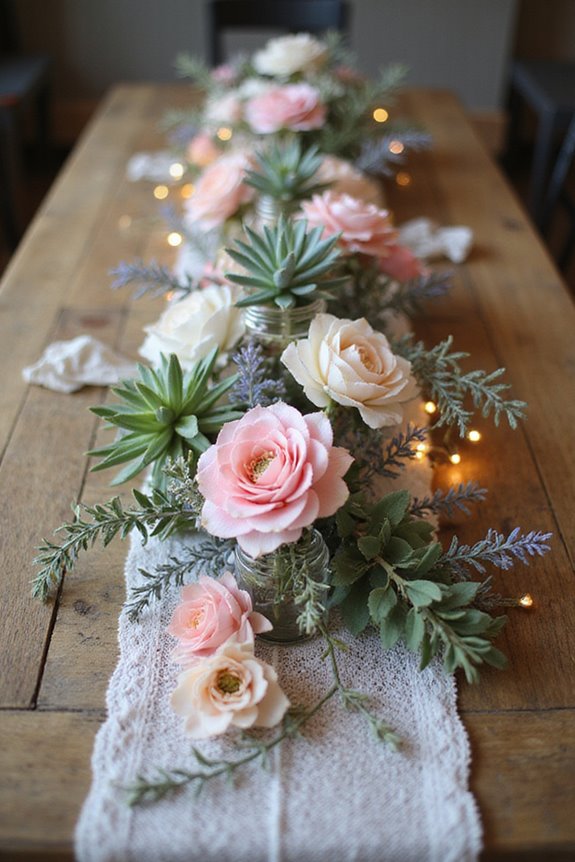
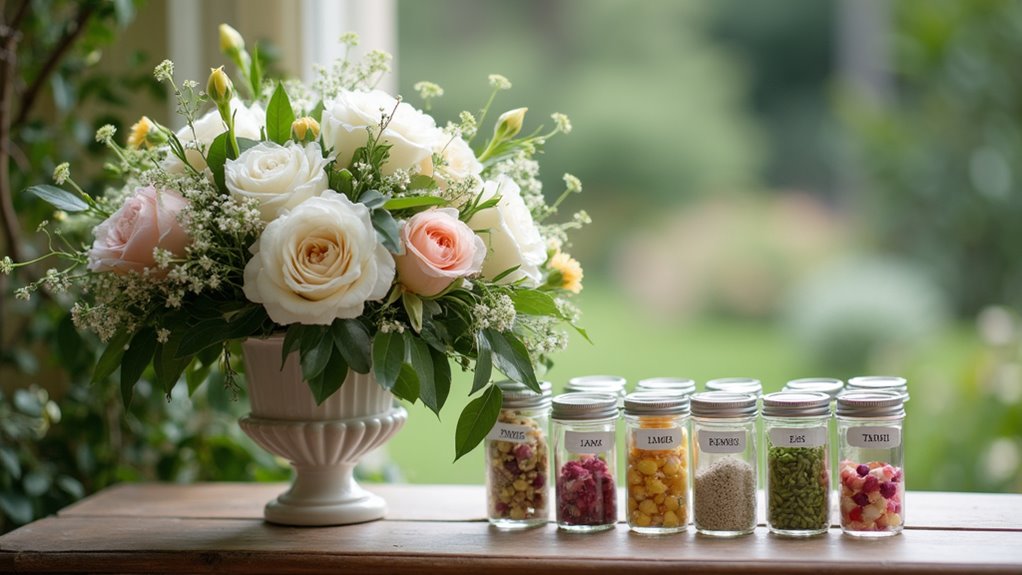
Have you thought about incorporating creative alternatives to traditional flowers for your wedding? There are plenty of unique options that can add a personal touch while saving you some money. Consider using potted plants or succulents, which guests can take home as favors. Dried flowers and herbs not only look stunning but also provide a rustic vibe. You could also opt for fabric flowers or paper blooms; they’re customizable and can match any color scheme. For a whimsical touch, think about using fruits or vegetables for centerpieces. Even branches and twigs can create a beautiful organic feel. These alternatives can be just as stunning and often come with a lower price tag than conventional floral arrangements.
How to Prioritize Your Floral Needs and Wants
As you plan your wedding, it’s essential to identify your floral needs and wants to stay within budget while achieving your desired aesthetic. Start by listing the key areas where flowers will be featured, like bouquets, centerpieces, and ceremony decor. Next, think about your must-haves versus nice-to-haves. For instance, if your heart is set on a stunning bridal bouquet, prioritize that over elaborate table arrangements. Consider seasonal flowers, as they’re often more affordable and readily available. Don’t forget to ask your florist for advice; they can help you maximize your budget while ensuring your vision shines through. Finally, remember that simplicity can be elegant—sometimes less is more when it comes to creating a beautiful atmosphere.
Frequently Asked Questions
What Is the Average Cost of Bridal Bouquets?
The average cost of bridal bouquets typically ranges from $100 to $300, depending on the flowers chosen and the intricacy of the design. You’ll want to factor in your budget and personal preferences when planning.
How Can I Repurpose Ceremony Flowers for the Reception?
You can easily repurpose ceremony flowers by moving them to reception tables, using altar arrangements as centerpieces, or placing bouquets in lounges. Just make certain you have a plan for transport and setup in advance!
Are Flower Delivery Fees Included in the Total Cost?
No, flower delivery fees typically aren’t included in the total cost. You’ll want to confirm with your florist about any additional charges for delivery, setup, or breakdown to avoid surprises on your big day.
Can I Buy Flowers Directly From a Local Market?
Yes, you can buy flowers directly from a local market! It’s often a cost-effective option, and you’ll find fresh, seasonal blooms. Just be sure to plan ahead for your wedding’s specific color and style needs.
How Far in Advance Should I Order Wedding Flowers?
You should order your wedding flowers at least three to six months in advance. This way, you’ll guarantee availability, get the best selection, and have ample time for any adjustments or changes you may need.