

How to Change Name After Marriage: A Simple Guide
Changing your name after marriage can feel overwhelming, but it doesn’t have to be. You’ve got options, whether you choose to take your partner’s name, hyphenate, or keep your maiden name. It’s important to understand the steps involved to guarantee everything goes smoothly. From gathering necessary documents to updating your Social Security card, each step is essential. Let’s explore how you can navigate this change effectively.
The Essentials
- Decide on your new surname option: partner’s last name, hyphenation, maiden name retention, or a blended name.
- Gather necessary documents, including your marriage certificate and current identification, for the name change process.
- Update your Social Security card by completing the application and submitting proof of identity and name change.
- Change your driver’s license or state ID by checking DMV requirements and paying any applicable fees.
- Notify banks, credit card companies, and service providers of your name change, providing necessary documentation.
Understanding Your Options: What Name Changes Are Available
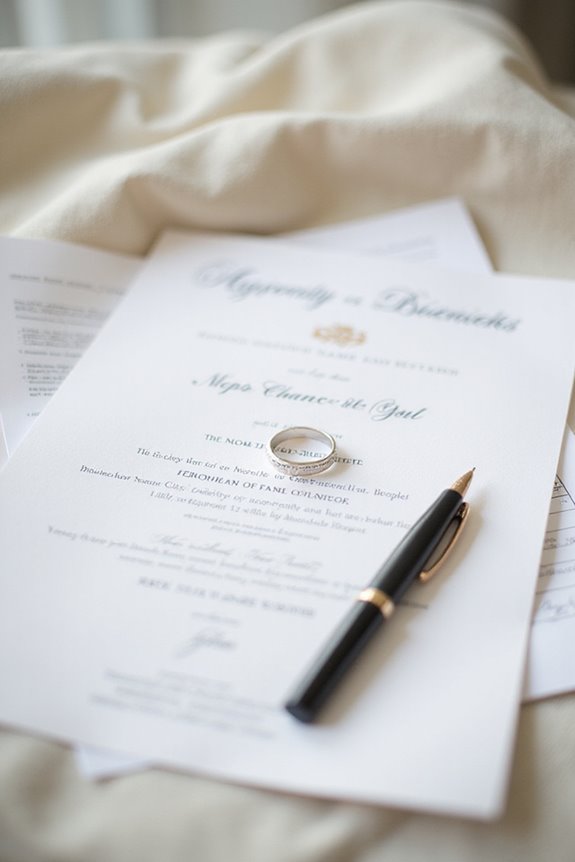
When you get married, you might be considering a name change, and it’s important to know your options before making a decision. You can choose to take your partner’s last name, hyphenate both surnames, or keep your maiden name. Some couples opt for a blend of both names, creating a new surname altogether. Each option has its pros and cons, depending on personal preference and cultural considerations. You may also want to think about how a name change could affect your identity, professional life, and any children you may have in the future. Take your time to discuss this with your partner, ensuring you both feel comfortable and aligned with the choice you make.
Preparing for the Name Change: Gather Necessary Documents
After deciding on your name change, it’s time to gather the necessary documents to make it official. First, you’ll need your marriage certificate, as it serves as proof of your new name. Make sure it’s an original or certified copy. Next, collect your current identification documents, like your driver’s license and passport. These will need to be updated with your new name. If you’ve changed your name previously, keep any court documents that support your name change history. Finally, don’t forget to gather any additional documents that might be required by specific agencies or institutions, such as bank statements or utility bills, to help facilitate the change. Getting organized now will streamline the process later.
Updating Your Social Security Card
To guarantee your name change is recognized federally, you’ll need to update your Social Security card. Start by completing the application form, which you can find online or at your local Social Security office. You’ll need to provide proof of your identity and your name change, typically your marriage certificate. Make sure to include a copy of your current Social Security card, too. Once you’ve gathered all the necessary documents, you can submit your application either by mail or in person. It usually takes about 10 to 14 days to receive your new card. Remember, updating your Social Security card is essential for tax purposes, benefits, and ensuring your name is consistent across all your official records.
Changing Your Driver’s License and State ID

Changing your driver’s license and state ID is an essential step after getting married if you’ve decided to adopt your spouse’s last name. To start, gather necessary documents like your marriage certificate, current ID, and proof of residence. Check your state’s DMV website for specific requirements, as they can vary. Most states allow you to apply online or in person, but some may require an appointment.
When you’re ready, fill out the application form for a name change. At the DMV, be prepared to pay a fee for the updated license or ID. Finally, once you receive your new driver’s license or ID, double-check that all information is correct. You’re one step closer to fully embracing your new name!
Informing Your Employer and Updating Payroll Information
Once you’ve updated your driver’s license and state ID, the next step is to inform your employer about your name change. It’s important to do this as soon as possible to guarantee your payroll information is accurate. Start by checking your company’s policy on name changes, which may require you to fill out specific forms or provide documentation. Schedule a meeting with your HR representative or your manager to discuss your change. Make sure to provide any required documents, such as your marriage certificate. Once your employer updates your records, confirm that your new name appears on your paychecks and tax forms. Keeping your information current helps avoid any issues with your salary or benefits down the line.
Notifying Financial Institutions and Creditors
As you adjust to your new name, it’s essential to notify financial institutions and creditors to confirm that all your accounts reflect this change. Start with your bank, credit cards, and any loans you have. Contact them directly, either online or by phone, and be ready to provide documentation, like your marriage certificate, to validate the name change.
Don’t forget about investment accounts, retirement plans, and any mortgages. Keeping your name consistent across all financial records helps prevent confusion and potential issues with credit reporting.
Finally, if you have any automatic payments or direct deposits set up, make sure to update those as well. This guarantees a smooth shift and keeps your financial matters in order.
Updating Personal Records: Utilities, Insurance, and More

When you’ve settled on your new name, updating personal records is essential to confirm everything reflects your change. Start with utilities like electricity, water, and internet; contact each provider to inform them of your new name. Next, update your insurance policies—be it health, car, or homeowner’s insurance—so they accurately represent you. Don’t forget to notify your employer about your name change for payroll and tax documents. It’s also a good idea to check with your bank and any subscription services you use. Finally, keep a checklist of all organizations you’ve contacted to confirm you don’t miss anything. With these updates, you’ll avoid potential confusion and confirm your records are consistent across the board.
Frequently Asked Questions
Can I Keep My Maiden Name Professionally After Marriage?
Yes, you can absolutely keep your maiden name professionally after marriage. It’s your choice, and many do. Just guarantee your professional documents reflect your preferred name for consistency in your career.
What if My Spouse Has a Different Last Name?
It’s totally fine if your spouse has a different last name. You can choose to keep your maiden name, hyphenate, or adopt their name. Just do what feels right for you both.
Will Changing My Name Affect My Credit Score?
No, changing your name won’t directly affect your credit score. However, it’s crucial to update your name with credit bureaus and financial institutions to guarantee your credit history remains linked to your new name.
How Long Do I Have to Change My Name After Marriage?
You typically have a few weeks to change your name after marriage, but it’s best to do it promptly. Most institutions recommend updating your name within 30 days to guarantee all records are accurate.
Can I Change My Name Back After Divorce?
Yes, you can change your name back after divorce. You’ll typically need to file a name change request during the divorce proceedings or afterward. Just check your state’s requirements to guarantee a smooth process.